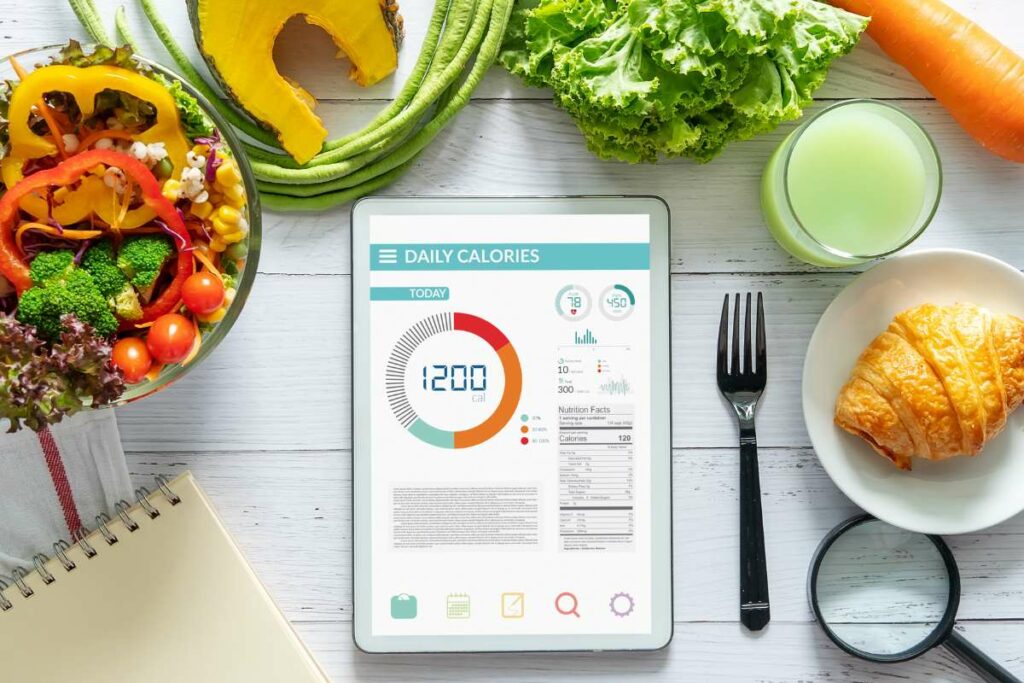
Although counting calories is widely recognized as a key component of diet management, there is another strategy for altering eating patterns to achieve goals: macronutrient counting. While macronutrients emphasize the quality of your diet, calories simply give you a number. Which of these approaches to diet management are most effective?
What are calories and how to track them?
Calories are units of energy found in food and beverages. Calories are used by your body for a variety of functions, including breathing and heart pumping. All of the body’s functions require the use of calories. Even when you are asleep, your body continues to burn calories. This is known as your basal metabolic rate, or BMR. You should never consume fewer calories in a day than your BMR because it is the lowest amount of calories required for involuntary body processes.
The FDA suggests consuming 2,000 calories a day. While this is a general guideline, the amount will vary depending on your fitness and nutrition objectives. Generally speaking, eating fewer calories causes weight loss, eating more calories causes weight gain, and eating in moderation causes weight maintenance.
There are several ways to monitor your caloric intake. One popular method is to keep a food diary or a mobile app to track what you eat and drink. Many apps, such as MyFitnessPal, offer a database of foods and calorie counts. You can also read nutrition labels on packaged foods and use kitchen scales to measure out portions for
homemade meals.
While calories are necessary for energy, the quality of calories consumed is also important for overall health and well-being. This is where macronutrients come in.
What are macronutrients?
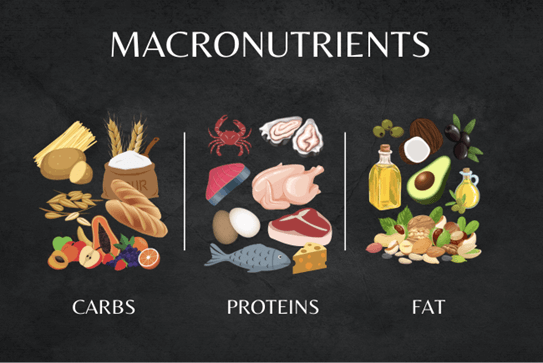
Macronutrients, or macros are essential nutrients that comprise the majority of the human diet and provide energy for various bodily functions. There are three main macronutrients:
- Carbohydrates: The body uses carbohydrates as its main energy source. These can be found in foods such as fruits, pasta, rice, and bread. Carbohydrates can be simple (sugars) or complex (starches and fiber). Carbohydrates contain 4 calories per gram.
- Proteins: Proteins are chains of amino acids that are essential for the structure, function, and regulation of body tissues and organs. Protein sources include meat, dairy products, seafood, and poultry. Protein contains four calories per gram.
- Fats: Fats, sometimes referred to as lipids, help the body absorb fat-soluble vitamins and act as a concentrated source of energy. Avocados, olive oil, nuts, and seeds are good sources of fat. For every gram of fat, there are 9 calories. Maintaining general health and achieving particular objectives, like weight loss or muscle growth, depends on the proper balance of these macronutrients. The optimal macronutrient ratio depends on individual factors and health goals.
How to track macronutrients?
Counting macronutrients can be an effective approach for weight loss, weight gain, or weight maintenance. You can gain a more detailed understanding of your nutritional balance by tracking your carbohydrate, protein, and fat intake.
Some general tips for counting macronutrients to support goals are:
- Set Goals: Your daily macronutrient goals should be based on age, activity level, weight, and objectives. A common macronutrient distribution for weight loss is around 40% carbohydrates, 30% protein, and 30% fats. A common range for weight gain is around 50% carbohydrate, 20% protein and 20% fat. A balanced distribution might include around 40-60% of calories from carbohydrates, 20-30% from proteins, and 20-30% from fats for those wanting to maintain.
- Caloric Deficit/Surplus: While focusing on macros, it’s essential to focus on calories as well. Consuming fewer calories than your body expends is crucial for weight loss. Consuming more calories than your body expends is crucial for weight gain. To maintain, your calorie intake should be equivalent to what your body expends. You can estimate how much your body expends by calculating your Total Daily Energy Expenditure (TDEE).
- Protein Priority: Prioritize lean protein intake to support muscle preservation during weight loss and weight gain. Aim for at least 1.6 to 2.2 grams of protein per kilogram of body weight to support muscle growth.
- Whole Foods: Choose nutrient-dense, whole foods over processed options to ensure you get essential vitamins and minerals in addition to macronutrients.
- Hydration: Stay hydrated, as proper hydration is crucial for overall health and can impact how your body processes nutrients. Water is also a macronutrient that needs to be increased when protein intake is increased to prevent dehydration.
- Carbohydrates: Carbohydrates are a primary energy source. Choose complex carbs like whole grains, vegetables, and fruits over simple carbs.
- Healthy Fats: Choose healthy fats like extra virgin olive oil, avocados, fish, nuts and seeds. Eating healthy fats is very important when the goal is to gain weight as you need to increase calorie density in your meals.
- Regular Monitoring: Periodically reassess your diet to ensure it aligns with your maintenance goals. Adjust your macro intake based on any changes in activity level, lifestyle, or body composition.
Remember, losing and gaining weight should be a gradual and healthy process. Seeking advice from a healthcare professional or a registered dietitian is recommended to ensure your diet promotes overall well-being and meets your individual needs.
Conclusion
In summary, counting calories provides a general view of energy intake, while counting macronutrients offers a more nuanced understanding of the types of nutrients consumed. The choice depends on individual goals and preferences.
Counting calories involves monitoring the energy content of your diet without regard to the nutrient source. It’s a broader approach often used for weight management. However, counting macronutrients requires keeping track of particular elements, such as proteins, fats, and carbohydrates. This method provides a more detailed analysis of your nutritional intake, which can be useful for fitness goals such as muscle building or following a specific diet plan.
Are you considering becoming a nutritional coach? Click here for more information.
If you would like to understand counting macronutrients in detail, follow us on Instagram @iftafitness for updates on Fitness Weekends (virtual and in-person) where we offer a “Counting Macronutrients” continuing education credit course.