The landscape of metabolic health, weight management, and fitness is experiencing a monumental shift. The widespread rise of GLP-1 receptor agonists—such as semaglutide and tirzepatide—has fundamentally changed how thousands of individuals approach long-term wellness. These medications have proven to be incredibly powerful tools for metabolic regulation and substantial weight loss. However, as the medical community and fitness professionals dive deeper into the clinical data, a critical realization has emerged: weight loss is not just about the number on the scale; it is entirely about body composition.
When the body experiences rapid weight reduction, it doesn’t just tap into stored adipose tissue (fat). Left to its own devices, a body in a steep caloric deficit will simultaneously break down lean skeletal muscle mass. Clinical studies indicate that without deliberate physical intervention, up to 25% to 40% of the total weight lost on GLP-1 medications can come directly from lean muscle.
For fitness coaches, personal trainers, and health advocates, this statistic highlights an urgent mission. Muscle tissue is not just for aesthetic appeal or athletic performance—muscle is your body’s metabolic engine. Preserving it isn’t an elective addition to a wellness plan; it is a non-negotiable requirement.
The Hazard of Muscle Loss on Metabolic Health
To understand why resistance training is mandatory during a GLP-1 journey, we have to look at how muscle tissue governs our overall health. Skeletal muscle is the primary driver of your resting metabolic rate (RMR). It is highly active tissue that burns calories even when your body is completely at rest. When an individual loses a significant percentage of muscle mass, their overall metabolic rate plummets. This creates a challenging biological loop where the body burns fewer calories, functional strength decreases, and long-term weight maintenance becomes significantly harder.
Furthermore, skeletal muscle plays a critical role in glucose disposal and insulin sensitivity. To achieve long-lasting metabolic health, maintaining—or even building—muscle tissue ensures that the body processes nutrients efficiently. If an individual drops significant weight but sacrifices their muscle foundation in the process, they risk ending up “sarcopenic obese,” a state where they have a lower body weight but a higher relative percentage of body fat and reduced functional strength.
Why Low-Impact Strength Training Fits Best
When an individual is undergoing rapid weight loss and metabolic adjustment, their structural framework is changing quickly. Rapidly shifting body composition alters center of gravity, postural alignment, and joint mechanics. This is precisely why high-impact, high-stress exercise modalities are often not the ideal starting point.
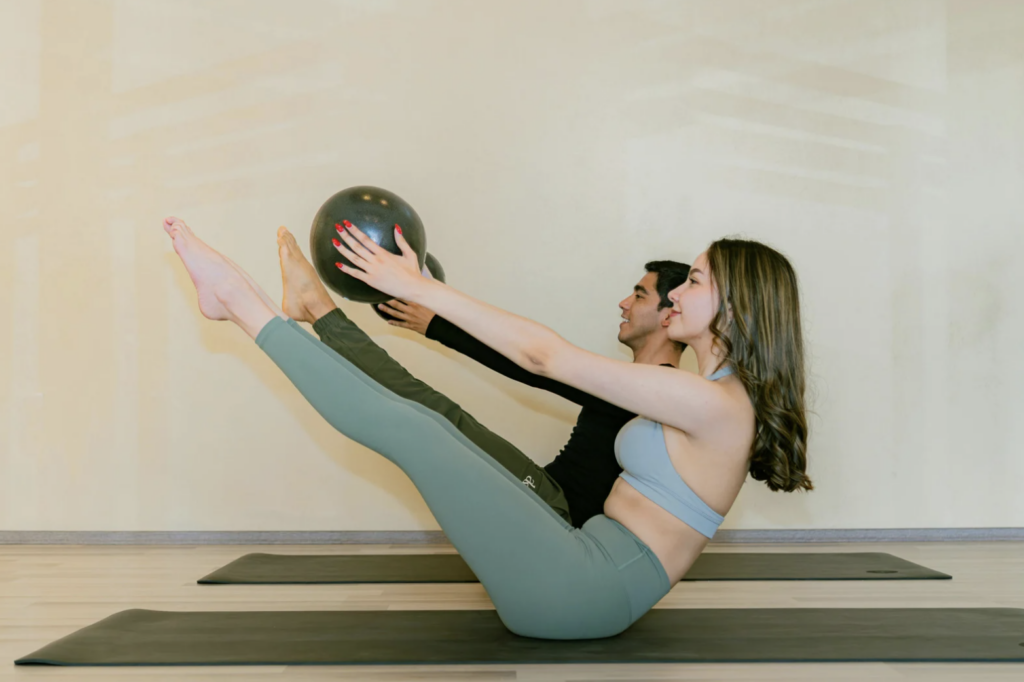
Instead, deliberate, low-impact strength training—such as pilates, barre, core-focused resistance work, controlled weightlifting, and structured band training—serves as the perfect physical partner. Low-impact strength training allows individuals to generate maximum muscular tension and trigger myofibrillar growth without subjecting the joints, tendons, and connective tissues to excessive concussive force or high-impact stress.
By slowing down the tempo and focusing on time-under-tension (such as emphasizing a controlled, multi-second eccentric lowering phase), coaches can help clients trigger muscle adaptation safely. This focused approach protects the skeletal structure while giving the nervous system and muscles the exact mechanical signaling required to retain lean mass.
Building a Long-Term Structural Foundation
Beyond metabolic preservation, low-impact strength training builds the structural integrity needed to support an evolving body. As weight drops, building core stability and stabilizing muscle groups ensures that posture, balance, and general functional movement remain sound. It changes the fitness paradigm from “working out to burn calories” to “training to support a vibrant, capable life.”
For fitness professionals, this marks an incredible opportunity to guide clients with empathy, science, and precision. It requires moving past old-school weight loss philosophies and focusing heavily on functional longevity. By highlighting joint-friendly, highly targeted resistance training, we ensure that individuals utilizing GLP-1 therapies emerge from their journeys not just lighter, but substantially stronger, more resilient, and fully equipped to maintain their health for years to come.
If you are a coach or fitness leader looking to master these joint-friendly, muscle-preserving modalities, look no further than our specialized training tracks, including the IFTA Pilates Certification or BootyScuplt Power Pilates. Expanding your repertoire to include smart, low-impact resistance training is the ultimate way to serve the evolving needs of your fitness community. Never stop learning, and let’s continue building sustainable strength together!